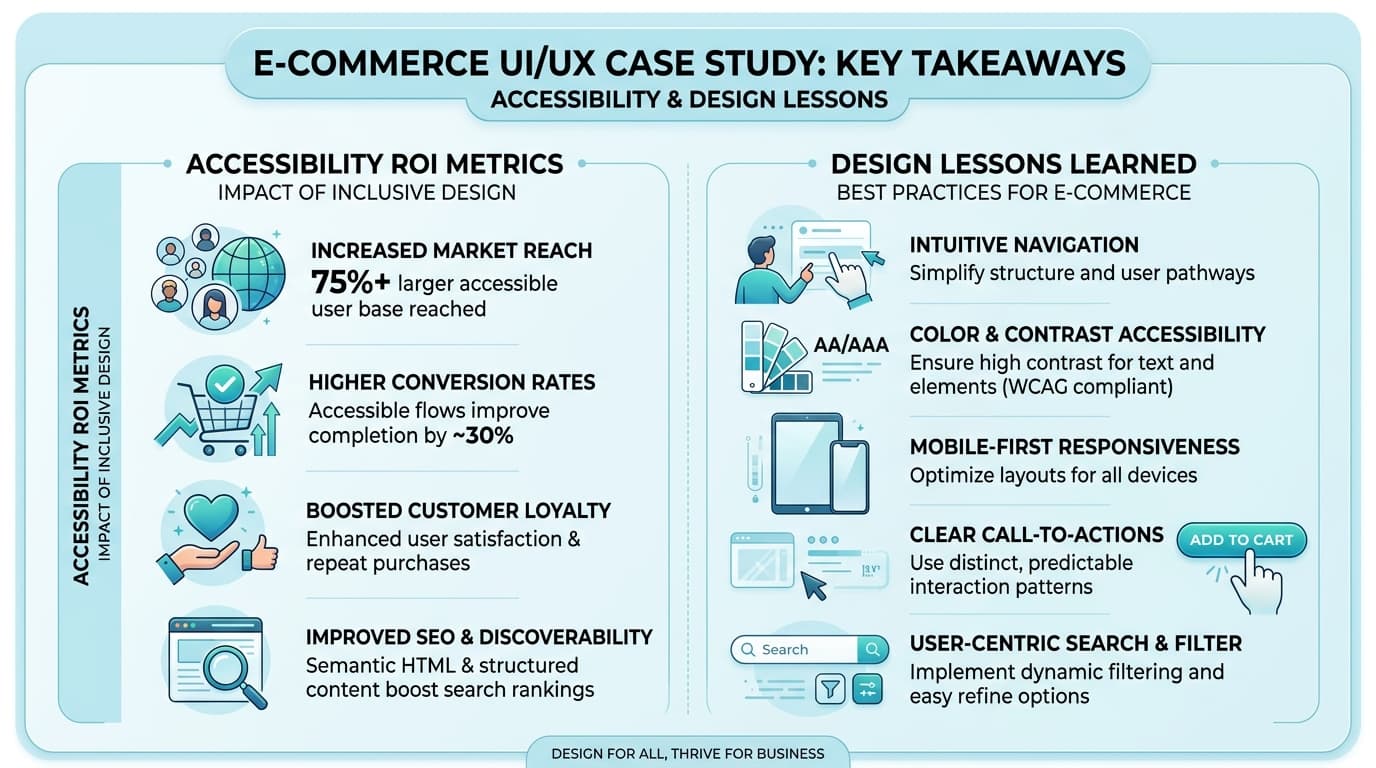
Bridging the Cultural & Logistics Gap in Gulf E-Commerce
AnE E-Commerce Platform | UAE
1. Executive Summary
The Product: AnE E-Commerce Platform (targeting the UAE market: Abu Dhabi, Dubai, and Ras Al Khaimah). The Challenge: A lack of clear delivery and fulfillment options—such as same-day delivery or in-store pickup—left users uncertain about when or how they would receive their products, hurting checkout conversions. The Solution: Designed a transparent, map-integrated fulfillment system tailored to UAE address infrastructure, giving users complete visibility over rapid delivery and local pickup options. The Results: Eliminated the fulfillment communication gap, optimized the shipping address flow, and drastically accelerated the user's path to purchase with clear delivery timelines.
2. The Problem & Context (The "Before")
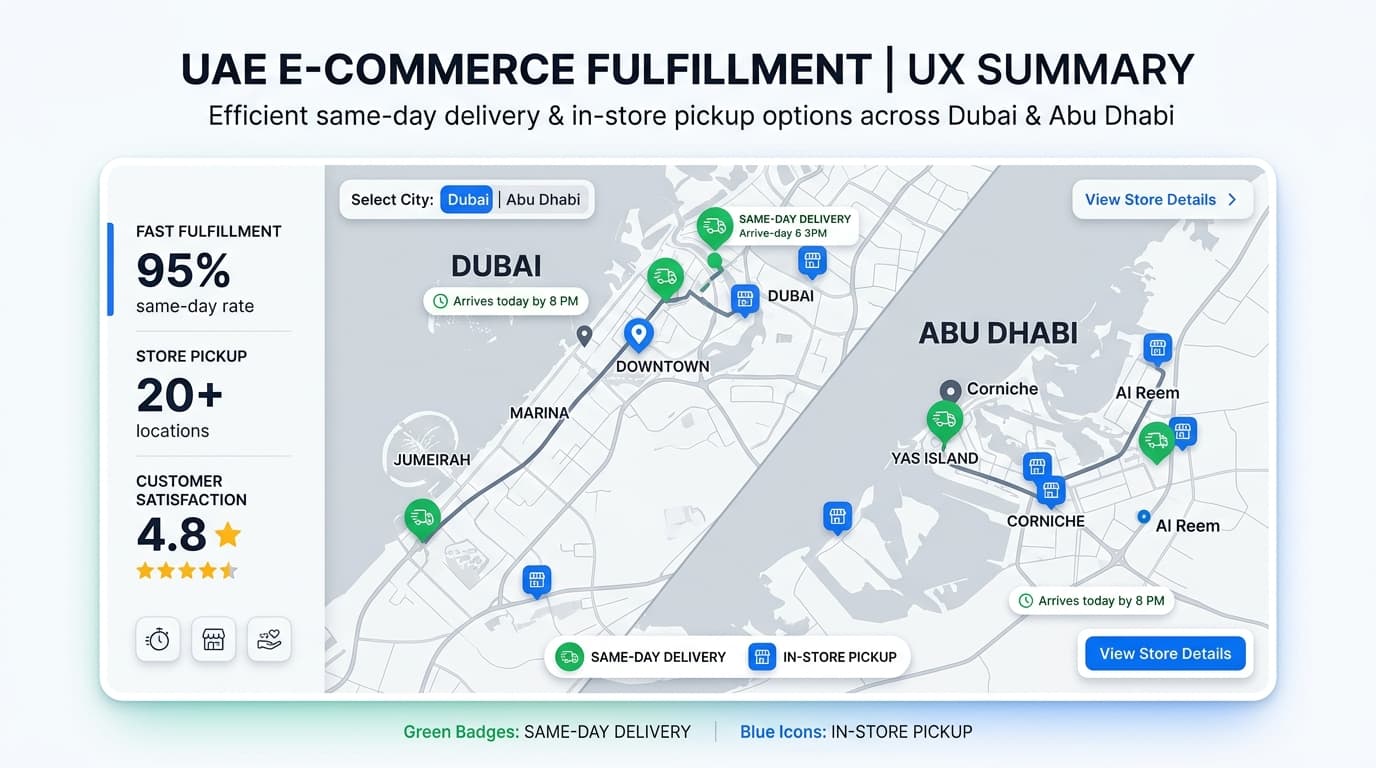
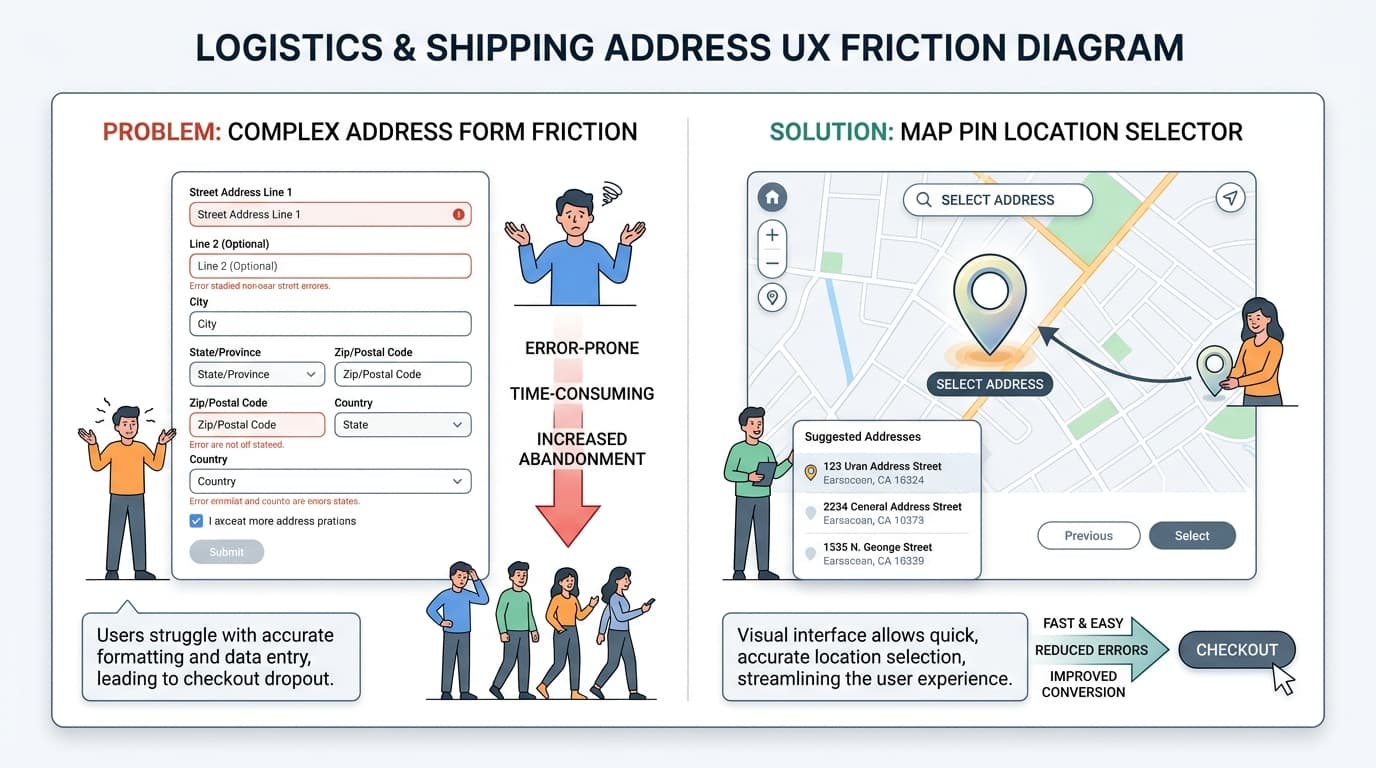
Operating across different regions requires a deep understanding of local infrastructure. For users in Abu Dhabi, Dubai, and Ras Al Khaimah (RAK), the standard checkout experience was causing drop-offs due to a major logistics blind spot: • Fulfillment Blind Spot: The platform lacked flexible delivery options. Users could not easily opt for hyper-local fulfillment methods like in-store pickup or same-day delivery. • Address Form Friction: Traditional, rigid address forms caused massive drop-offs because they didn't align well with how addresses are structured and navigated in the UAE. • The Cultural & Geographical Gap: Designing from India for a UAE audience meant the team had to look closely at local feedback to understand regional behavioral nuances and expectations around delivery speed.
3. The Design Strategy & Solution
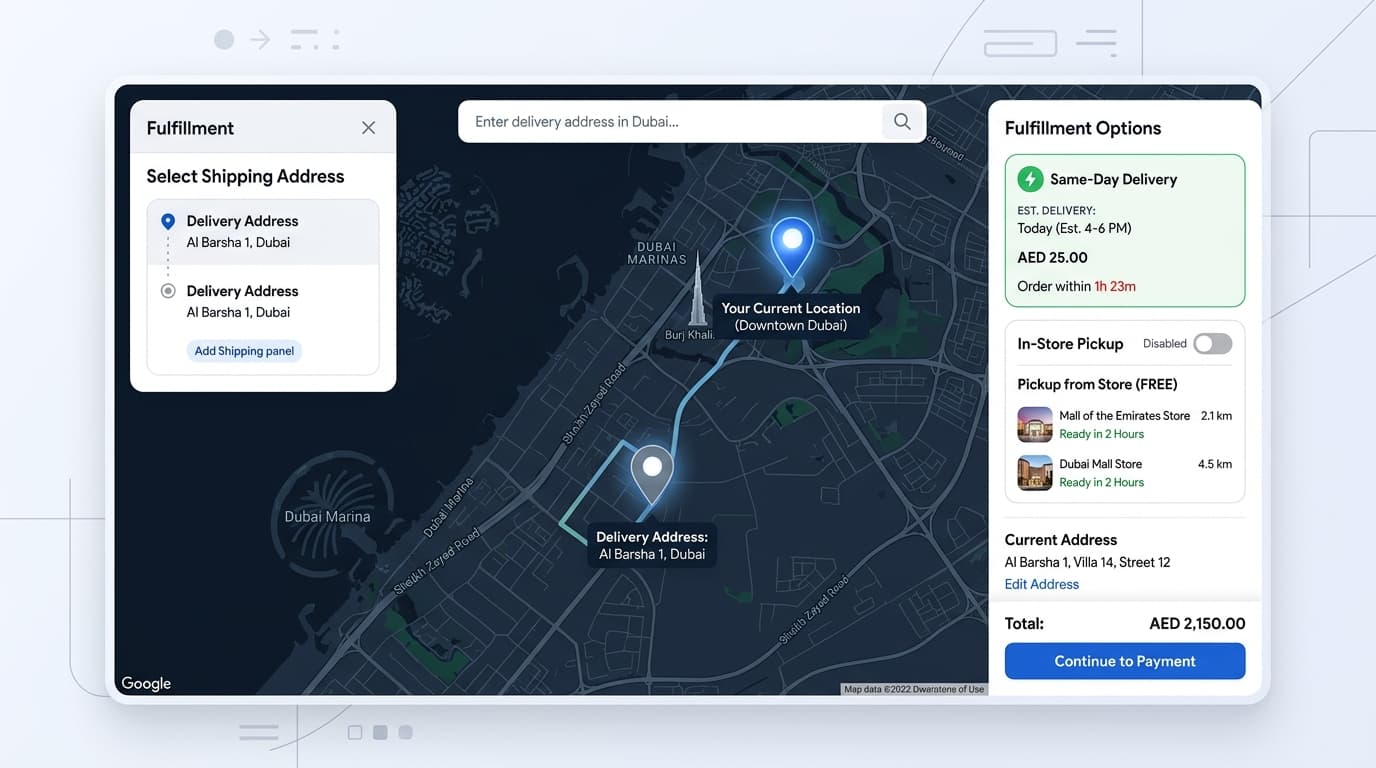
To unlock revenue, the redesign focused heavily on transparency, localized mapping, and friction-free address forms. Localized UX Insights Through direct feedback loops with the local Dubai-based team, we uncovered the cultural gap: UAE consumers expect hyper-fast, highly communicative logistics. Interactive Fulfillment Mapping & In-Store Pickup We introduced a brand-new fulfillment selection step early in the journey: • Better Mapping & Transparency: Instead of making users guess delivery windows, we integrated clean visual mapping that instantly showed the closest pickup location or verified same-day delivery eligibility based on their location. • Omnichannel Flexibility: Added clear toggles for In-Store Pickup alongside home delivery, turning a rigid online funnel into a flexible omnichannel experience. Smoothed Shipping Address Flow We overhauled the address form fields to accommodate local nuances. By reducing fields and incorporating a visual map-pin selector, we eliminated the friction of typing out complex text-based addresses, directly boosting checkout completion rates.
4. The Business & User Impact (The "After")
• Increased Conversion Potential: Smoothing out the shipping address form flow directly reduced checkout abandonment and drove up sales revenue. • Radical Logistics Transparency: Users moved from zero visibility to absolute clarity, allowing them to map out and choose the fastest way to get their products. • Bridged Team Alignment: Successfully translated cross-border team feedback into a functional interface that solved a specific regional infrastructure pain point.
5. Key Takeaways & Lessons Learned
UX is Local, Not Universal: What works for address forms in India doesn't automatically translate to the UAE. You have to listen to regional teams to build empathy for the actual end-user's environment. Fulfillment is Part of the Interface: A user's experience doesn't end when they hit "buy." Integrating clear, visual logistics right into the interface is a massive driver for conversion and trust.